

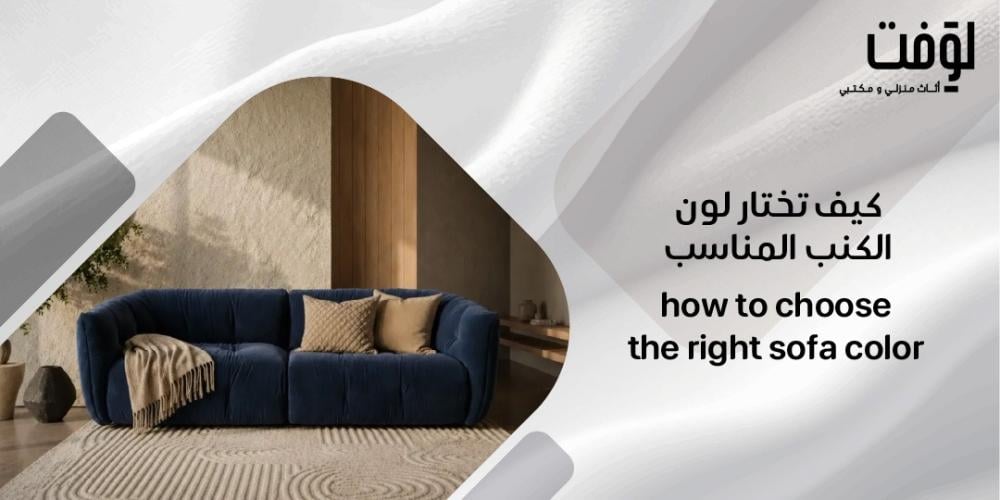
How to choose the right sofa color for your majlis or living room is a question that may seem simple on the surface, but in reality, it requires much more than merely liking a specific shade. The direct answer: making the correct choice depends on room size, lighting strength, wall and flooring colors, and the nature of daily use. Light and neutral shades give small or dimly lit rooms a sense of spaciousness and tranquility, whereas dark tones suit expansive spaces when balanced with lighter elements.
A common pitfall many encounter is that a color looks fantastic inside the showroom, only to appear completely different once delivered home. This occurs due to ambient lighting and the colors of surrounding walls and flooring, which significantly affect color reflection. In Saudi and Gulf homes specifically, the equation becomes even more complex: open-plan halls for receiving guests, frequent family use, and the presence of children mean that choosing the right sofa color is not just an aesthetic decision, but a practical one that impacts your daily comfort for years to come. Explore the sofa collections at Loft and choose the shade that complements every detail of your majlis or living room.
How to Choose the Right Sofa Color Based on Room Size
Room size is one of the most influential factors when selecting a sofa color; ignoring it can result in a piece that looks out of place within its surrounding environment, even if it is beautiful on its own. Before considering how to choose the right sofa color for your home, measure the space where the couch will be placed and visualize how its overall mass will fit into the room’s broader landscape.
1. Small Rooms
In rooms with limited dimensions or narrow pathways, color plays a vital visual role that cannot be understated. Light colors do not physically expand a room, but they create a visual sense of openness that makes the space feel airier and less crowded.
Suitable shades for a small living room sofa include:
- Light Beige: Reflects natural light and provides visual calm that enhances the feeling of space.
- Off-White: A comfortable option that coordinates well with most walls while visually softening heavy furniture.
- Light Gray: Adds a modern touch without weighing down the room, particularly in spaces with limited artificial lighting.
A practical tip to help you: Measure the wall area against which the sofa will be placed and identify the available walking paths. If the couch occupies a large portion of your line of sight, lighter colors are almost always the most suitable choice—keeping in mind that the perception of spaciousness is also influenced by the sofa's physical size and surrounding decor elements.
2. Spacious Halls
Large halls and expansive majlis spaces can easily accommodate bolder, deeper shades. A couch for a large majlis can feature dark tones that add a sense of luxury and calculated visual weight, filling the space rather than leaving it feeling sparse.
Colors that harmonize well with large spaces:
- Dark Brown: Imparts warmth and sophistication to a large majlis, making it feel more cohesive and unified.
- Navy Blue: Gives the hall an elegant yet modern feel; it is among the shades that expand the visual impact of a room.
- Dark Green: A distinctive choice that conveys elegance while breaking the monotony of standard neutral colors.
It is worth noting that dark colors can feel visually heavy in tight spaces. Therefore, this rule should not be applied rigidly to every home, as other factors—such as lighting, couch size, and surrounding items—also play a key role.
3. Open-Plan Spaces
In open-plan layouts that merge the living area with the dining space or entryway into a single open environment, the sofa color serves a functional purpose beyond aesthetics. Colors that visually expand space can define and highlight the living zone within a unified layout while maintaining a cohesive color link to adjacent areas through rugs, cushions, or curtains. Cohesion does not require exact matching; a shared color element connecting both zones visually is sufficient to make the overall space look well-planned and complete.
Top Sofa Colors from Loft
If you are seeking a practical answer on how to choose the right sofa color, Loft offers a selection of sofas that combine contemporary design with a variety of shades to suit different tastes and varying room sizes. Before making a purchase decision, compare the shade you prefer with the piece’s dimensions and your actual room area, as color alone is insufficient if the dimensions do not fit the available space.
1. KARDASH SOFA 4 SEATER
The KARDASH SOFA 4 SEATER is a four-person sofa in a rich dark brown GLAM COGNAC shade, upholstered in a luxurious, soft-touch fabric, measuring 297 cm (L) × 141 cm (W) × 79 cm (H). Ideal for large living rooms and formal guest receptions, its deep brown color imparts warmth and luxury, while its elegant design offers flexible integration across various decor styles.
- Important selection tip: Check wall length and walk-through clearance in front of the sofa before selecting this size.
2. TANGO 3 SOFA 3 SEATER
The TANGO 3 SOFA 3 SEATER is a three-person sofa in a Dark Green fabric finish, measuring 218 cm × 100 cm × 75.5 cm. Its modern design suits living rooms, lounge areas, and family gatherings, while the dark green hue adds a tranquil, luxurious character that is hard to achieve with standard neutral colors.
- Important selection tip: This color stands out best when framed by light-colored walls or rugs to offset the depth of darker tones in the room.
The Effect of Daily Lighting
Before settling on any sofa, there is a critical factor often overlooked by buyers that leads to later disappointment: lighting. The color you see in a photograph or showroom may not be the exact shade you see once the sofa is installed in your living room. Knowing how to choose the right sofa color starts here—with understanding how color tones interact with different light sources.
1. Daylight
Direct or indirect sunlight reveals colors in their true form, but daylight is constantly shifting. The same shade can look different in the morning compared to the evening, and tones may appear cooler under bright mid-day light than during warm sunset hours. For this reason, lighter colors are recommended for rooms with few windows or limited natural light, as they reflect available light and make the space feel larger. In rooms with abundant natural light, deeper shades can be used comfortably, especially when light walls or floors offset potential visual weight.
2. Warm Lighting
Evening living room lighting plays a much larger role in color perception than expected. Warm or yellow-tinted light bulbs increase the visual warmth of a color, making grays look more beige and soft blues shift toward green. Conversely, cool white lighting strips away warmth, accentuating neutral tones sharply. This variance is not a product flaw, but rather the natural way color tones are perceived under changing light sources.
3. Fabric Sample Testing
Testing a fabric swatch is the most practical method to avoid surprises. Before finalizing your decision, follow these steps:
- Request or inspect a fabric sample before buying.
- Place the sample next to the wall and flooring in the intended room.
- Examine the sample at two distinct times: morning and evening.
- Turn on the usual room lights in the evening to observe how the color transforms.
These practical steps answer how to choose the right sofa color specifically for your environment, rather than relying solely on product images.
Coordinating Living Room Elements
Before choosing a sofa color, it is crucial to view the living room as a unified visual entity rather than isolated pieces. A sofa is a substantial item that occupies a large visual footprint in a majlis; therefore, its color should stem from the home’s overall color palette—from the walls down to the rugs, curtains, and lighting.
A helpful tool in this context is the 60–30–10 Rule, which suggests dividing the space's color scheme into three levels:
- 60% Primary Color: Covers the background elements, such as the walls.
- 30% Secondary Color: Represented by the sofa or major furniture pieces.
- 10% Accent Color: Featured in throw pillows, art, or decorative accessories.
These percentages are not rigid rules, but rather a flexible framework to help achieve visual balance without color overload.
1. Wall Colors
Coordinating the sofa with the walls is the natural starting point, as walls form the main backdrop against which all other elements are viewed.
- Light or neutral walls (white, beige, light gray): You can opt for a sofa in a rich or dark shade—such as dark brown, deep green, or navy blue—to create a striking, attractive contrast.
- Vibrant or saturated walls: It is best to choose a sofa in neutral or muted shades (such as gray, beige, or cream) to reduce visual clutter and provide a restful focal point.
2. Suitable Flooring
Flooring is a fixed element that rarely changes, so it should be considered directly when selecting a sofa color to ensure overall harmony.
- Warm wooden floors: Pair naturally with beige, brown, and caramel tones, creating a cozy and harmonious ambiance.
- Marble or light ceramic floors: Allow for broader choices, harmonizing smoothly with gray, navy blue, and dark green.
3. Rugs and Curtains
The colors of rugs and curtains directly influence how the sofa color is read within a space, requiring careful coordination among them:
- Light-colored sofas: Can be paired with patterned or multi-toned rugs without creating visual heaviness, as colors do not feel overcrowded.
- Dark-colored sofas: Benefit from lighter-toned rugs, curtains, or cushions, restoring visual balance and preventing the room from feeling weighed down.
Coordination between rugs and curtains does not require an exact match; it is sufficient for both elements to share a common color temperature—whether warm or cool.
4. Cushions and Accessories
Cushions are the versatile component in a home color palette because they can be changed at any time at a low cost. Instead of selecting a sofa in a bold color that may be difficult to live with long term, opt for a sofa in a neutral or classic shade, then introduce accent colors seasonally or whenever your decor preferences change. This keeps the room feeling fresh without requiring you to replace major furniture pieces.
Different Decor Styles
The approach to choosing a sofa color varies based on the decorative style of the space. What works in a modern room will not necessarily suit a classic majlis or a rustic interior. The atmosphere you wish to cultivate—whether calm, warm, luxurious, or vibrant—ultimately dictates your decision. Always start by understanding the general style of the room, then test how well your chosen color harmonizes with existing elements like flooring, walls, and drapery.
1. Modern Style
Modern sofas lean heavily toward neutral shades such as gray, beige, and off-white because they convey visual cleanliness and spaciousness. A single rich accent color—such as dark green or navy blue—can be introduced as a focal point to break monotony without disrupting balance. Modern sofas in these tones remain stylish for years without feeling outdated.
2. Classic Style
A classic majlis calls for warm, deep colors such as brown, caramel, and deep beige, along with serene regal tones that impart a sense of permanence and elegance. Metallic or wooden details enhance this style provided they are kept balanced; an overabundance of colors can compromise the grandeur and visual unity of a classic majlis.
3. Rustic Style
Rustic decor is rooted in earth tones. Brown, beige, and soft olive are the ideal colors for a rustic sofa, as they harmonize naturally with raw materials to create a warm, unpretentious environment. Coarse-textured rugs and natural-fabric cushions add an extra layer of visual warmth characteristic of this aesthetic.
4. Bohemian Style
Bohemian decor offers flexibility and can be executed successfully in two ways:
- Option 1: Choose a neutral-colored sofa as a stable base, then layer colorful textiles, patterns, and multi-hued cushions to achieve the rich visual depth typical of this style.
- Option 2: Select a bolder, deeper sofa color while keeping surrounding elements lighter and more muted to maintain visual balance.
If you are looking for a sofa that fits the theme of your home regardless of its style, Loft offers a diverse range of sofas in colors and fabrics tailored to suit various interior tastes. Once you know how to select the right sofa color, you will find an option at Loft that reflects your vision.
Common Buying Mistakes
Before purchasing a sofa, take a moment to review common mistakes people make when choosing colors. Knowing how to choose the right sofa color means understanding not only what works, but also what to avoid.
1. Selecting the Sofa Color in Isolation
One of the most common styling errors is choosing the sofa color before determining the colors of the walls, floors, and rugs. Trying to build a design scheme around an unstudied color choice later can leave you with limited options and an inconsistent look that is difficult to correct.
2. Ignoring Lighting Conditions
Evaluating a color solely under artificial showroom lighting or on a phone screen can lead to an unpleasant surprise once the sofa arrives home. Relying on a physical fabric sample and examining it in the actual room under both natural and artificial light is the most accurate approach before buying.
3. Relying Solely on Product Photos
Placing a dark sofa in a small, poorly lit room without adding light-colored balancing elements can make the space feel cramped and heavy. Conversely, an extremely light sofa in a high-traffic family environment requires frequent maintenance that you may not be prepared for.
4. Overlooking Daily Usage Patterns
Before paying, review this complete checklist:
- Proper dimensions for the space.
- Dominant light source (natural vs. artificial).
- Wall color as a backdrop.
- Flooring shade.
- Rug and curtain coordination.
- Overall design style.
- Frequency and intensity of daily use.
This checklist protects you from a decision you might regret later, while Loft's wide selection of sofas makes choosing with confidence simple.
Conclusion
If you are wondering how to choose the right sofa color, the answer always begins with assessing your room's space and natural lighting. From there, coordinate the shade with your walls, flooring, and rugs, ultimately picking a color that aligns with your decor style and daily lifestyle needs. This systematic approach prevents hasty decisions that could disrupt the balance of your home. Remember that testing a physical fabric sample and measuring room dimensions are indispensable steps before making your final choice.
Browse the sofa collection at Loft today to compare available shades and dimensions, and discover the piece that adds comfort and harmony to your living space.